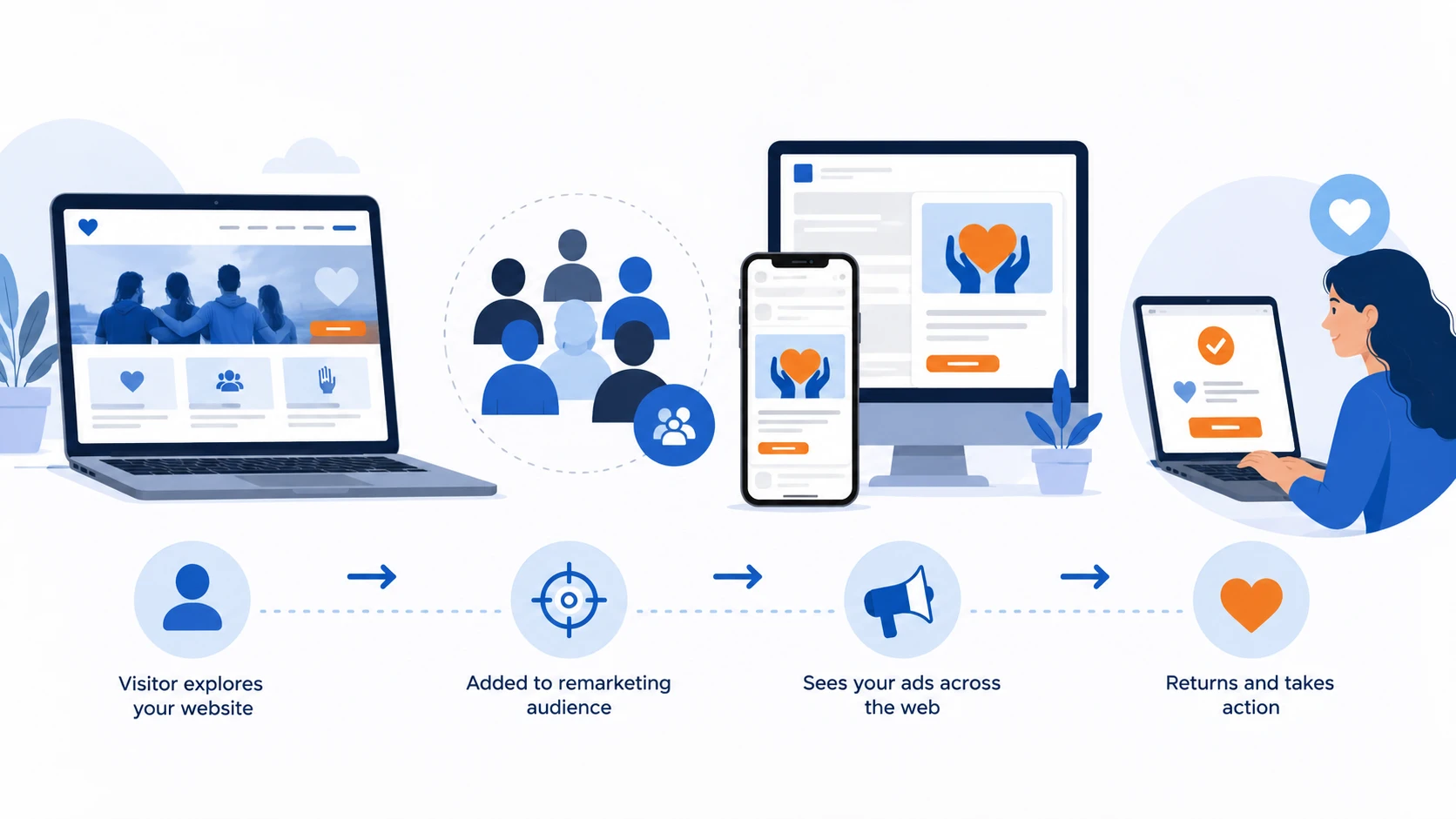
If your nonprofit uses Google Ads, you are probably already working hard to bring new people to your website. But what happens when someone visits, shows interest, and leaves before taking action?
Maybe they opened your donation page but got distracted. Maybe they looked at an upcoming event and planned to come back later.
That is where remarketing comes in.
A Google remarketing campaign helps your nonprofit reconnect with previous website visitors and gives them another reason to return. This guide walks through the setup without turning it into a full Google Ads course.
Table of Contents
How Google Remarketing Works
Remarketing helps your nonprofit reconnect with people who visited its website but left before donating, registering, volunteering, or taking another step.
To set up a campaign, you first need a way to identify those previous visitors and group them inside Google Ads.
What Is a Remarketing Campaign?
A remarketing campaign shows ads to people who have already visited your website.
For example, someone may visit your donation page but leave before contributing. Later, they may see one of your ads while browsing another website or using a Google platform.
Because they already know something about your nonprofit, the ad serves as a reminder instead of a first introduction.
You may also hear this called retargeting. The terms are often used interchangeably, although remarketing can include other ways of reconnecting with people beyond website ads.
How Does Google Identify Website Visitors?
Google uses a piece of tracking code called the Google tag.
Once installed, the tag helps Google Ads build groups of eligible website visitors. Google calls these groups “your data segments,” although you may still hear them called remarketing lists or audiences.
You will not receive visitors’ names or personal information. Google uses the recorded website activity to decide who may be shown one of your ads later.
The tag can be installed directly on the website, through Google Tag Manager, or by connecting another Google product. If you do not manage the website yourself, you may need help from your developer or marketing team.
Decide Who You Want to Bring Back
Before opening Google Ads, think about who you want to reach and what you want them to do when they return.
Someone who looked at volunteer opportunities probably should not see the same ad as someone who opened your donation page. The message should connect with what originally brought that visitor to your website.
You might create audiences for people who visited:
- A donation or fundraising page
- An upcoming event
- A volunteer application
- Information about a specific program
A smaller nonprofit may not have enough website traffic to divide visitors into several groups right away. In that case, begin with a general website visitor audience and create more focused groups as traffic grows.
Set Up Your Tracking and Audience
Once you know who you want to reach, you can connect your website to Google Ads and build the audience for your campaign.
Add the Google Tag to Your Website
In Google Ads, open the Tools menu and select Data Manager. Under Google tag, click Manage to review the current setup and installation options.
Google may let you install a new tag, use one already on the website, connect another Google product, or send the instructions to your developer. The tag should usually be installed across the website so you have more options when creating audiences.
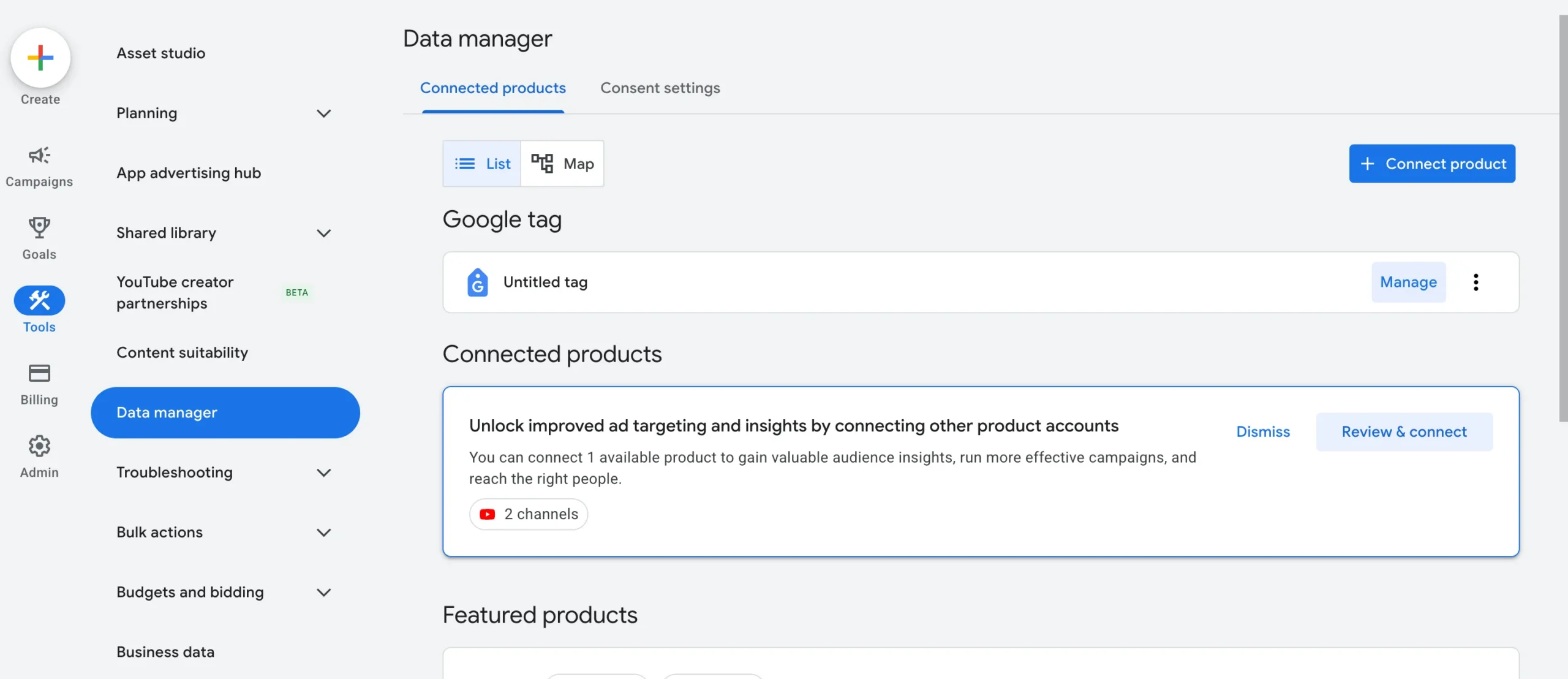
Once it is installed, use Google Tag Assistant or the diagnostics in Google Ads to confirm it is collecting activity.
Create Your Website Visitor Audience
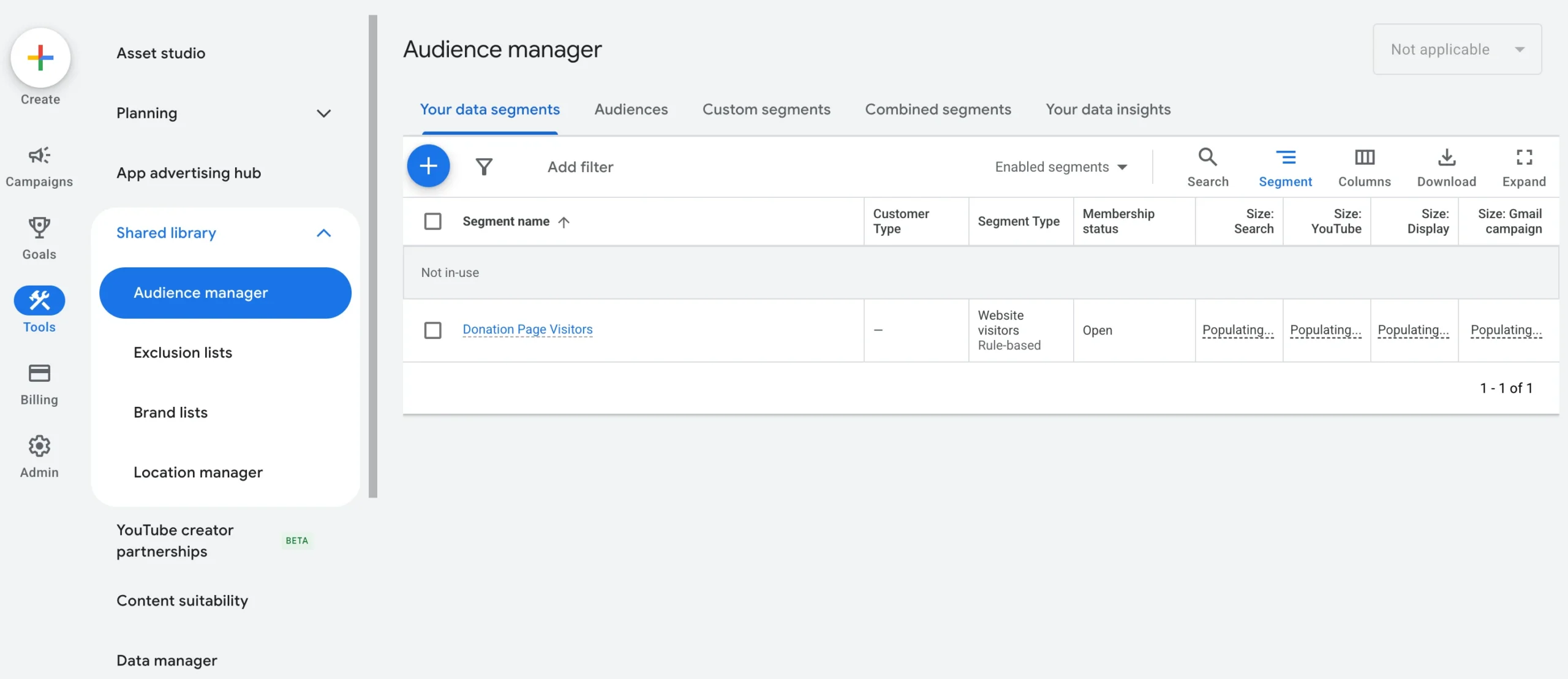
In Google Ads, open Tools, select Shared Library, and then open Audience Manager. In the Segments section, click the plus button and choose Website Visitors.
Give the segment a clear name, such as “Donation Page Visitors,” and choose the page or activity that should add someone to it. For example, you could include anyone who visited a URL containing /donate/.
Google will also ask how long someone should remain in the audience. An ongoing fundraising campaign may use a longer period, while an event audience may only be useful until registration closes.
A smaller website may take longer to build an audience large enough to run the campaign.
Exclude People Who Already Took Action
If you want to reach people who opened the donation page but did not donate, include donation page visitors while excluding anyone who reached the confirmation or thank-you page.
The same approach works for event registrations, volunteer applications, downloads, and contact forms. It protects your budget and stops people from seeing ads for something they already completed.
Create the Remarketing Campaign
Once the tag and audience are ready, you can move on to the campaign itself.
Google began moving its traditional Display campaigns into Demand Gen in 2026. Depending on your account, you may still see a Display campaign option, a Demand Gen option, or a prompt to move an existing campaign.
The screens may look different from older tutorials, but the main setup process remains similar.
Set Up Your Campaign
Open the Campaigns section and choose the option to create a new campaign.
Choose Your Goal
Choose the goal that best matches what you want visitors to do.
Name the Campaign
Give the campaign a clear name that identifies its audience and purpose.
Choose Locations and Languages
Select the locations and languages you want to reach.
Set Budget and Bidding
Set your budget and choose the bidding approach that fits the campaign goal.
Add Your Audience
Add the website visitor audience you created in Audience Manager.
Create the Ads
Add your headlines, descriptions, images, logos, videos, and calls to action.
Review and Publish
Check the audience, budget, tracking, landing pages, and ad assets before publishing.
Review Google’s recommendations before accepting them, since the suggested settings may not always fit your audience or budget.
Before launching, confirm that conversion tracking is working. If the campaign is meant to generate donations, registrations, applications, downloads, or form submissions, make sure Google Ads is tracking that action rather than clicks alone.
Review Who the Campaign May Reach
Take a close look at the audience and targeting options before publishing.
Google may use settings that allow the campaign to reach people beyond the website visitor audience you selected. That can be helpful when you want to find new supporters, but those additional people may not have visited your website before.
Make sure you understand who may see the campaign. You can always create a separate pay-per-click advertising campaign when you are ready to reach a broader audience.
Create Ads That Give People a Reason to Return
Your ads should connect with what someone viewed during the original website visit.
If they looked at an upcoming event, show them an event-focused ad. If they read about volunteering, bring them back with a message about getting involved.
Avoid sending everyone to your homepage. Link the ad to the page that picks up where the visitor left off.
Keep the message focused. Use recognizable photos and branding, and give the visitor one clear reason to return.
Set a Budget and Monitor the Campaign
A remarketing campaign does not need a large budget to get started, but it does need regular attention. Set an amount your nonprofit can comfortably test, then watch what happens after the ads begin running.
Choose a Budget You Can Review
Costs vary by audience, location, competition, and campaign goal. Start with an amount your nonprofit can comfortably test, then judge the campaign by donations, registrations, applications, or other completed actions rather than clicks alone.
A Google Ads ROI calculator can help you compare campaign costs with the results it generates.
Watch Frequency and Placements
Remarketing audiences are often smaller, so the same person may see an ad several times. If that happens too often, change the image or copy, shorten the audience duration, or lower the budget.
Review where the ads appear and remove placements that continue spending money without producing donations, registrations, or other useful results.
If your nonprofit does not have someone who can regularly review the targeting, tracking, spending, and results, outside help with Google Ads campaign management may be worth considering.
Before you launch: Nonprofits working with health, addiction, financial hardship, housing, religion, or other private topics should review Google’s personalized advertising policies before creating website visitor audiences.
Google Ad Grants is intended for eligible Search advertising, so visual remarketing campaigns will generally require a separate paid Google Ads account and budget.
Manage Your Donations More Efficiently
Your first campaign does not need to be complicated. Start with one audience, one goal, and an ad that brings people back to the right page. Then use the results to decide what to adjust next.
At Capital Business Solutions, we help nonprofits improve their accounting processes and save time managing their finances.
Our nonprofit fund accounting and financial management solutions can help your organization track donations, manage funds, prepare reports, and keep important financial information organized.
To learn more, call (888) 249-6008 or fill out our online contact form.